






How to Become a Walmart Supplier: DSV vs. WFS Requirements Explained
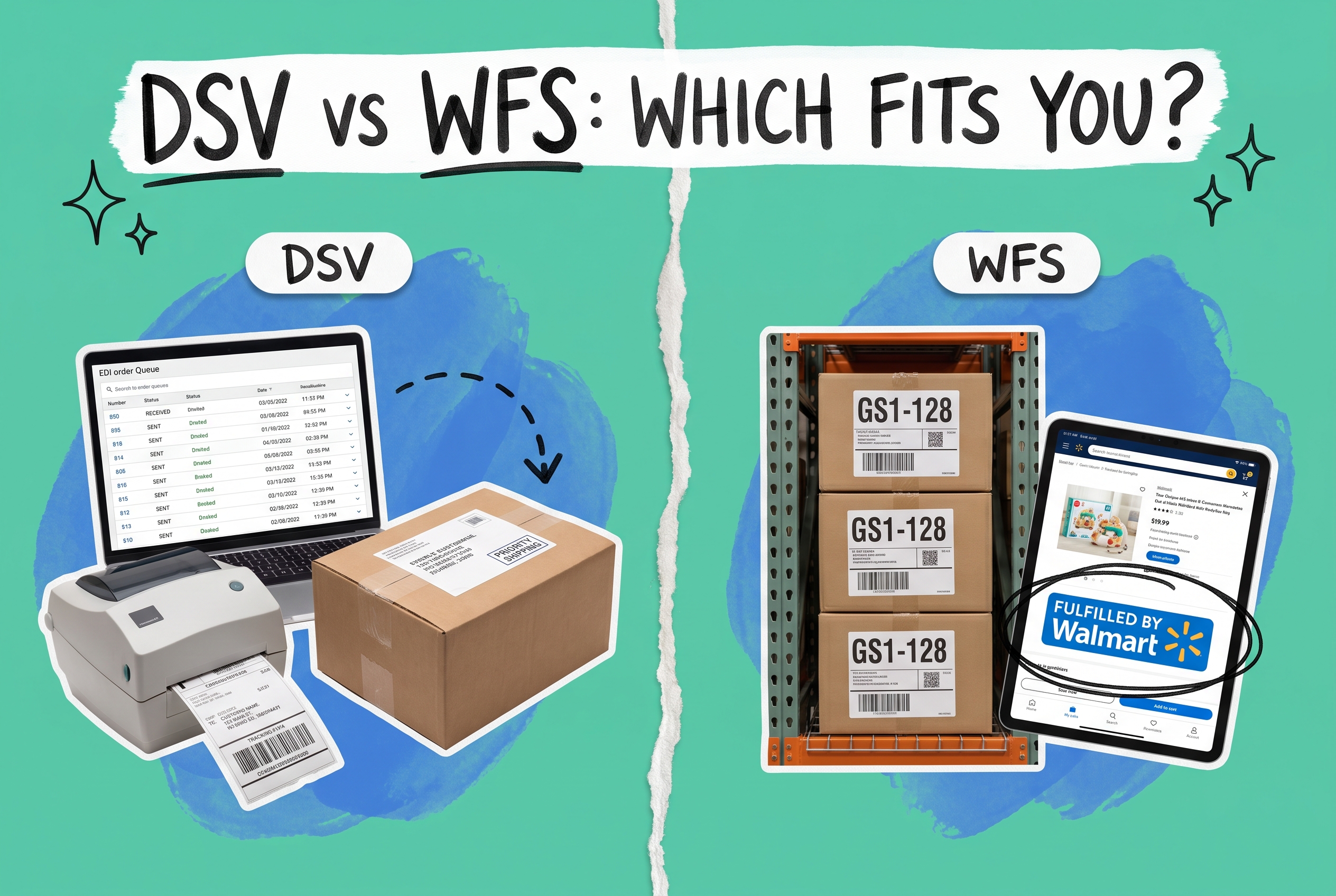
Becoming a Walmart supplier means choosing between two distinct operational models before you fill out a single form: Drop-Ship Vendor (DSV), where Walmart sends you EDI purchase orders and you ship directly to customers, and Walmart Fulfillment Services (WFS), where you stock Walmart's fulfillment centers and they handle last-mile delivery. Both models give your brand access to Walmart's customer base, but they carry different inventory obligations, compliance requirements, and integration needs. Understanding which model fits your operation before you apply avoids a costly pivot after you're already approved.
What Are Walmart's Supplier Programs?
Most e-commerce brands entering the Walmart ecosystem choose one of two arrangements:
DSV (Drop-Ship Vendor) is a first-party relationship. Walmart acts as your customer. When a shopper buys your product on Walmart.com, Walmart issues an EDI 850 purchase order to you. You ship the item directly to the consumer, then invoice Walmart via EDI 810. Your products appear on Walmart.com with Walmart as the seller of record.
WFS (Walmart Fulfillment Services) is a third-party fulfillment model. You remain the seller on Walmart Marketplace, but you send inventory to Walmart's fulfillment centers in advance. When an order comes in, Walmart picks, packs, and ships it. WFS-fulfilled products earn a "Fulfilled by Walmart" badge, which typically improves conversion by signaling fast, reliable shipping.
There's a third category worth briefly noting: traditional wholesale, where you sell goods directly to Walmart (stores or Walmart.com) at cost for them to resell. That path involves a separate negotiation process and is typically reserved for established consumer brands with high-volume retail potential. This guide focuses on DSV and WFS, because those are the entry points most e-commerce brands pursue first.
How to Apply: The Walmart Vendor Application Process
Both programs begin at Walmart's Supplier Center (supplierregistration.walmart.com). Here's what the process looks like from registration to first live order.
Submit a supplier registration. Create an account and complete the online application. You'll provide company details, product categories, estimated annual volume, and financial information. Walmart's sourcing team reviews applications and reaches out to qualifying candidates. There's no fixed timeline, but most brands should plan for weeks to months at this stage.
Complete item and product setup. Once Walmart shows interest, you set up your item catalog in Supplier Center or Seller Center depending on your model. Every SKU requires a valid GS1 UPC barcode, detailed product content (images, descriptions, attributes), and adherence to Walmart's content standards. Gaps in item setup delay your go-live date more than almost anything else.
Pass EDI testing and certification (DSV only). DSV suppliers must complete EDI certification before processing live orders. Walmart's EDI team tests your ability to send and receive the required transaction sets accurately. Failed tests push your launch back, and this is where many brands lose months.
Comply with routing and logistics requirements. DSV suppliers ship directly to consumers using Walmart-approved carriers. WFS suppliers send inbound inventory to Walmart's fulfillment centers following specific packing, labeling, and scheduling requirements. Non-compliance triggers chargebacks or inbound receiving fees.
Maintain OTIF performance from day one. OTIF (On Time In Full) measures whether you ship the right quantity on or before the committed ship date. Walmart tracks this metric closely for DSV suppliers and applies financial penalties for consistent failures. Getting your order management processes in place before your first PO arrives is not optional.
EDI Compliance Requirements for Walmart DSV Suppliers
EDI is the operational core of the DSV program. Walmart communicates every order, change, and payment electronically, and your systems need to respond correctly for each transaction.
The three required transaction sets:
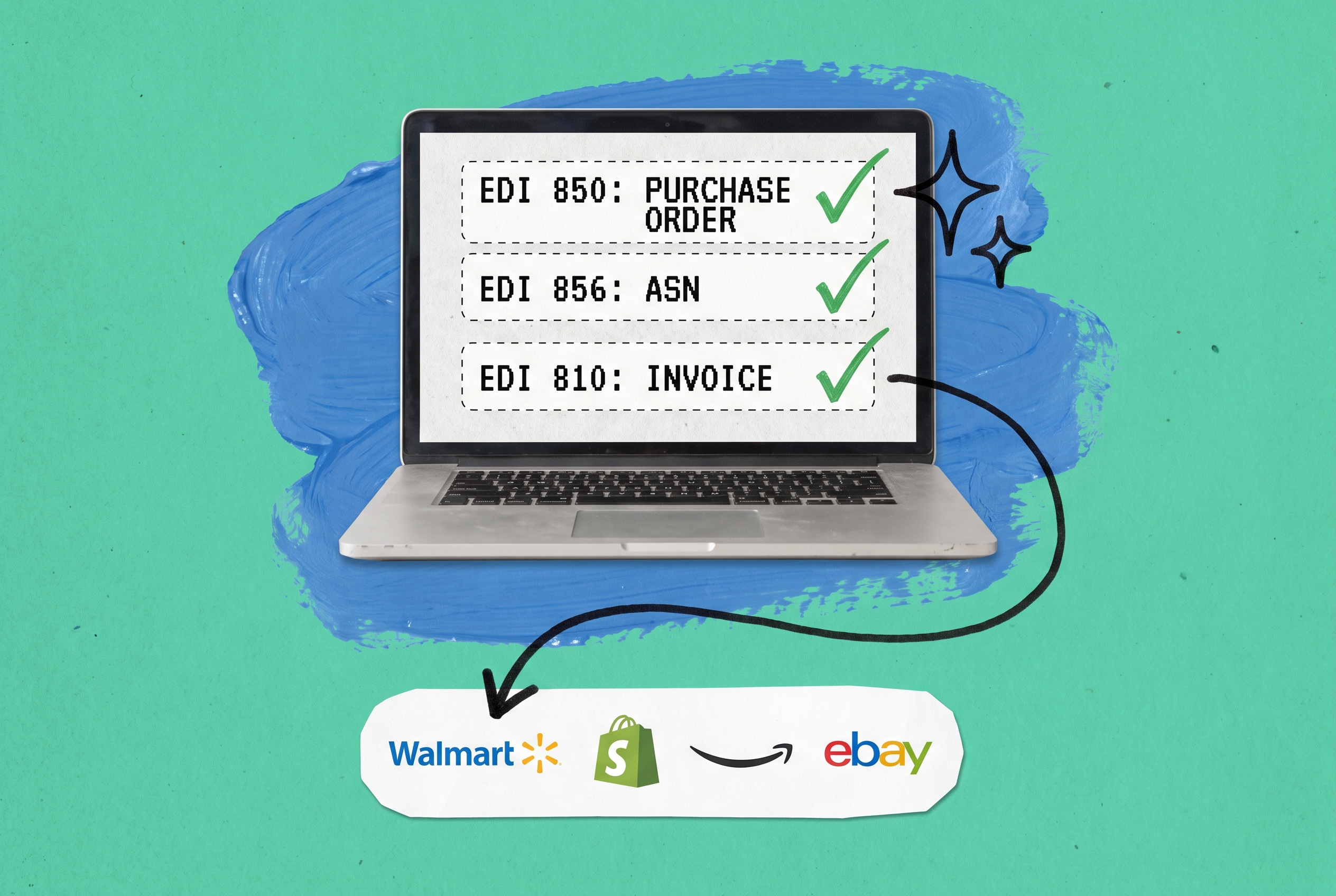
EDI 850 (Purchase Order): Walmart sends this when a shopper places an order. It includes the ship-to address, requested ship date, line-item details, and quantities. Your system must receive and process it without manual intervention.
EDI 856 (Advance Ship Notice / ASN): You send this at or before the time of shipment. It tells Walmart exactly what you shipped, in what packaging configuration, and which carrier and tracking number you used. Late or inaccurate ASNs generate chargebacks at a flat rate per violation.
EDI 810 (Invoice): You send this after shipment to bill Walmart for the order. The invoice must match the original PO on item number, quantity, and agreed price. Any discrepancy triggers a deduction or dispute.
You'll also encounter EDI 860 (PO Change, sent by Walmart when order details change before shipment) and EDI 820 (Remittance Advice, so you can reconcile payments accurately).
Running these transactions manually or through spreadsheets isn't practical beyond a handful of orders per week. For brands selling across multiple channels, routing Walmart EDI transactions through a central order management system lets you process POs, generate ASNs, and track compliance without manually re-keying data between systems.
OmniOrders connects directly to Walmart and handles the EDI transaction flow as part of its native channel integration. When a Walmart EDI 850 arrives, the order appears in your central dashboard alongside orders from Shopify, Amazon, eBay, and other channels. You can set up no-code automation rules to route Walmart orders to the right warehouse, apply carrier preferences, and trigger ASN generation automatically rather than managing each step by hand.
If you're evaluating how EDI fits into a broader multi-channel strategy, the post on EDI integration for ecommerce sellers onboarding with Walmart and big-box retail covers the full onboarding process in detail.
Inventory Considerations for WFS Sellers
WFS has a different operational challenge: you're pre-stocking a fulfillment network, which means you need accurate demand forecasts to avoid stockouts and excess inventory fees.
Before sending your first inbound shipment, you need an approved Walmart Marketplace seller account with WFS enabled, GS1/GTIN barcodes on every unit, items listed and live on the marketplace, and accurate product dimensions and weights for shipping rate calculations.
Inbound shipments to WFS fulfillment centers follow strict packing and labeling requirements. Pallets must meet Walmart's specifications. Cartons need GS1-128 labels in the correct format. Each unit needs an individual UPC or Walmart-specific item label. Non-compliant shipments get rejected at the receiving dock.
For brands managing stock across Shopify, Amazon FBA, WFS, and their own warehouse simultaneously, real-time multi-channel inventory sync becomes the operational linchpin. Overselling on any channel because WFS inventory was misallocated creates customer service problems and damages your marketplace performance metrics. You can review how OmniOrders manages channel connections in the integrations documentation.
What Keeps Suppliers Compliant After Approval
Approval is the beginning. Staying compliant is the ongoing operational work.
For DSV suppliers, the key risks are OTIF failures (shipping late or short), ASN inaccuracies (wrong tracking number or carton count), and invoice discrepancies (billing for items or quantities that don't match the PO). Any of these can result in chargebacks, and repeated issues escalate to account-level review.
For WFS sellers, the risks shift to stockouts (running out of inventory at Walmart's fulfillment centers causes the WFS badge to disappear and order velocity to drop), inbound compliance failures (mislabeled or improperly packed shipments get rejected or assessed fees), and over-stocking (sending too much inventory ties up capital in storage fees).
A central OMS that tracks order status, flags exceptions, and gives you visibility across all channels helps you catch problems before they become chargebacks or fulfilled with the wrong item.
DSV vs. WFS at a Glance
DSV | WFS | |
|---|---|---|
Relationship type | 1P (you sell TO Walmart) | 3P (you sell ON Walmart) |
Who ships to customer | You | Walmart |
Inventory held by | You | Walmart fulfillment centers |
EDI required | Yes (850, 856, 810) | No (uses Seller Center) |
Key compliance risk | OTIF, ASN accuracy, invoice match | Stockouts, inbound packing compliance |
Best for | Brands with reliable direct-ship operations | Brands wanting outsourced last-mile delivery |
Connect Walmart to Your Broader Operations
Whether you're pursuing DSV or WFS, Walmart demands operational precision that's hard to maintain manually, especially if Walmart sits alongside Shopify, Amazon, eBay, or other channels. A brand running four storefronts simultaneously needs consistent inventory numbers, correct order routing, and clean records across all of them.
OmniOrders connects natively to Walmart (see the Walmart channel integration) and centralizes orders, inventory, and fulfillment workflows in one place. You process Walmart EDI transactions, route orders, sync inventory, and track compliance alongside every other channel you sell on, without switching between systems.
Start your free OmniOrders trial and connect your Walmart channel alongside every storefront you sell on.
Frequently asked questions
What is a Walmart DSV (Drop-Ship Vendor)?
A Walmart DSV is a first-party supplier relationship where Walmart issues purchase orders to you via EDI and you ship directly to end customers on Walmart's behalf. Walmart appears as the seller of record on Walmart.com. The core compliance obligation is accurate EDI transaction handling: receiving the 850, sending the 856 ASN before or at shipment, and sending the 810 invoice after.
How long does the Walmart vendor application process take?
There's no guaranteed timeline. Initial review after registering on the Walmart Supplier Center typically takes several weeks. If Walmart's sourcing team pursues your category, item setup, EDI testing, and logistics certification add more time on top. Most brands should plan for a three-to-six-month window from first application to processing a live order, with EDI readiness being the most common bottleneck.
What EDI documents does Walmart require for DSV suppliers?
The three required transaction sets are EDI 850 (Purchase Order, inbound from Walmart), EDI 856 (Advance Ship Notice, outbound from you), and EDI 810 (Invoice, outbound from you). You'll also handle EDI 860 (PO Change) and EDI 820 (Remittance). All transaction sets must pass Walmart's EDI certification test before any live orders flow.
What are the requirements to sell through Walmart Fulfillment Services (WFS)?
You need an active Walmart Marketplace seller account with WFS enabled, live product listings carrying valid GS1 barcodes, and inbound shipments that meet Walmart's packing and labeling specifications. WFS also expects consistent inbound compliance quality; repeated failures result in receiving fees, inbound restrictions, or account holds.
What is OTIF compliance at Walmart?
OTIF stands for On Time In Full. It measures whether you shipped the correct quantity on or before the committed ship date. For DSV suppliers, Walmart tracks OTIF performance and charges financial penalties for consistent failures. Keeping it high requires reliable order processing and carrier performance, not just good intentions on your side of the shipment.
Start your 14-day free trial
See how OmniOrders connects your sales channels, 3PLs, and carriers into one operational layer — free for 14 days, no credit card.