








What Is the Inventory Module in ERP? (And When Standalone Software Beats It)
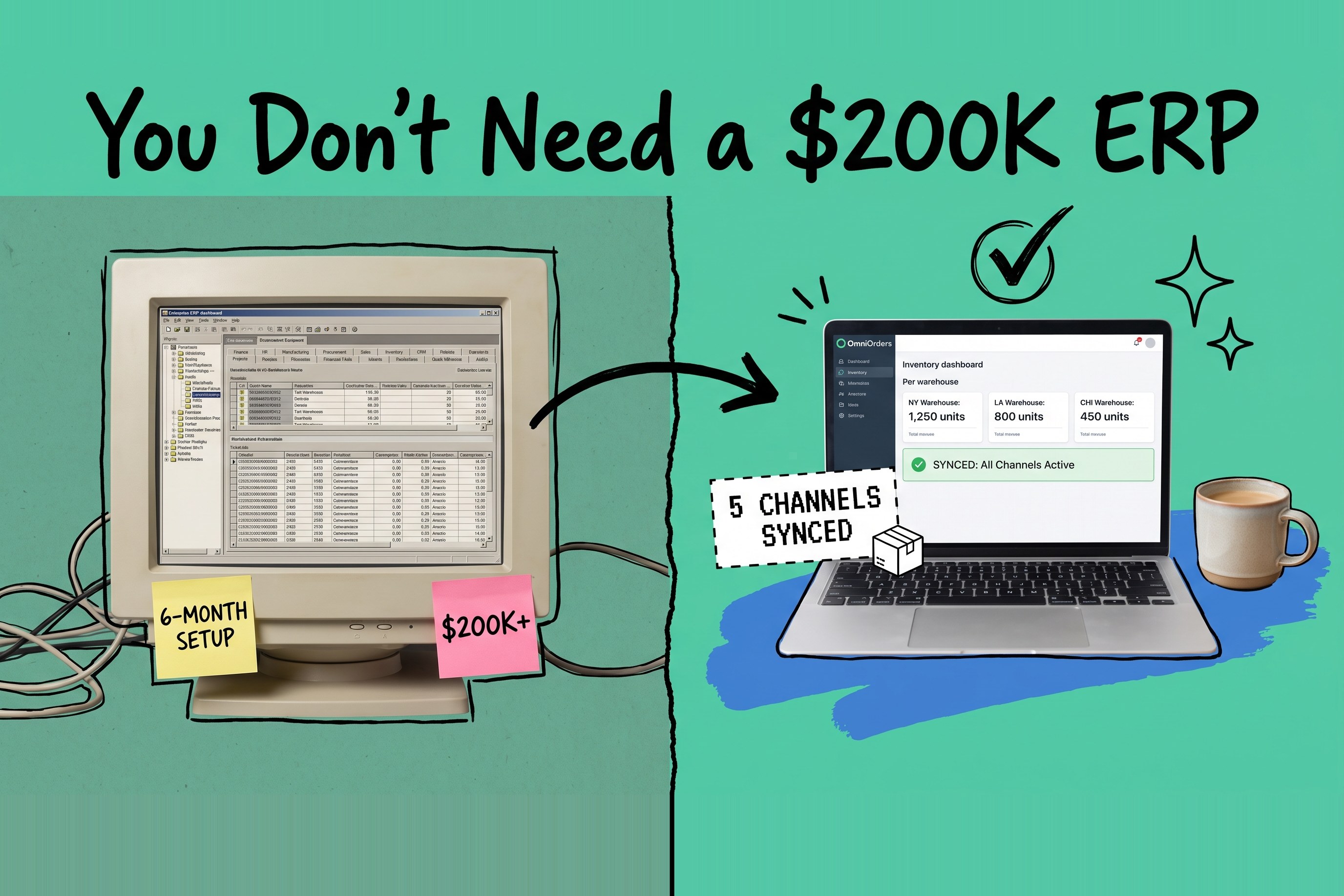
The inventory module in an ERP is the component that tracks stock levels, purchase orders, warehouse locations, and goods movement across your business, keeping that data synchronized with finance, manufacturing, and sales in a single shared system. For most growing ecommerce brands, the honest question is not "What does an ERP inventory module do?" but "Do I actually need a full ERP to get those capabilities?"
The answer is almost always no. Purpose-built multi-channel inventory management software gives you real-time stock sync, multi-location visibility, and automated replenishment at a fraction of the cost and setup time of platforms like NetSuite, SAP, or Acumatica.
What an ERP Inventory Module Actually Does
An ERP (Enterprise Resource Planning) system ties together every major business function: accounting, procurement, manufacturing, HR, and operations, all sharing one database. The inventory module is the piece that handles stock.
A fully configured ERP inventory module typically covers:
- Real-time stock levels across locations, with automatic updates when orders ship or stock moves
- Purchase order management to trigger replenishment when inventory drops below a threshold
- Goods receipt and transfer tracking between warehouses or production sites
- Lot and serial number tracking for products that require traceability
- Inventory valuation methods (FIFO, LIFO, weighted average) tied directly to the general ledger
- Multi-location management so you know exactly how much stock you have at each DC, store, or 3PL
These are legitimate, high-value capabilities. The problem is that you get them bundled inside a system built for manufacturers and large enterprises, not for a brand selling across Shopify, Amazon, and Walmart.
ERP vs Standalone Inventory Software: The Real Tradeoff
A full ERP implementation takes months. Consulting costs can run six figures before you've processed a single order. Your team then needs training on a system designed to serve every department, which means most of the interface is irrelevant to your ops staff. ERP providers also charge per-module, per-user licensing that adds up as your headcount grows.
Standalone inventory software takes a different approach. It focuses specifically on the stock, order, and fulfillment layer. That narrower focus means faster implementation, lower cost, and a product roadmap built around ecommerce operations rather than manufacturing plants or accounting departments.
Here is where each approach genuinely wins:
ERPs win when you need:
- Deep integration with manufacturing (bills of materials, production runs)
- Consolidated financial reporting that flows directly from inventory movements into your general ledger
- HR, payroll, or procurement functions sharing data with your inventory
Standalone inventory software wins when you need:
- Fast deployment in weeks, not months, without a systems integrator
- Pre-built connections to Shopify, Amazon, eBay, Etsy, and Walmart
- Multi-channel order routing and real-time stock sync across your selling channels
- A system your ops team can manage without an ERP consultant on retainer
If your business does not involve manufacturing and you sell through two or more channels, you're probably paying for complexity you don't need.
What About ERP vs WMS?
A warehouse management system (WMS) goes deeper into physical warehouse operations: pick-pack-ship workflows, bin locations, barcode scanning, and wave picking. A standard ERP inventory module does not cover this level of detail.
Some ERPs offer WMS add-ons, but a purpose-built order management system can handle both sides: managing inventory across channels while also supporting fulfillment workflows inside the warehouse. That's the layer most multi-channel brands actually need, something that sits between your sales channels and your warehouse, routes orders intelligently, and keeps stock in sync everywhere.
Signs You've Outgrown Your Current Tools
Most ecommerce brands don't start with a sophisticated platform. They start with spreadsheets or the inventory tracking baked into their Shopify store. That works until it doesn't.
You've likely outgrown your current setup when:
- You're manually reconciling stock counts across two or more channels at least once a week
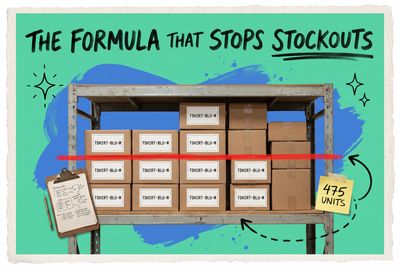
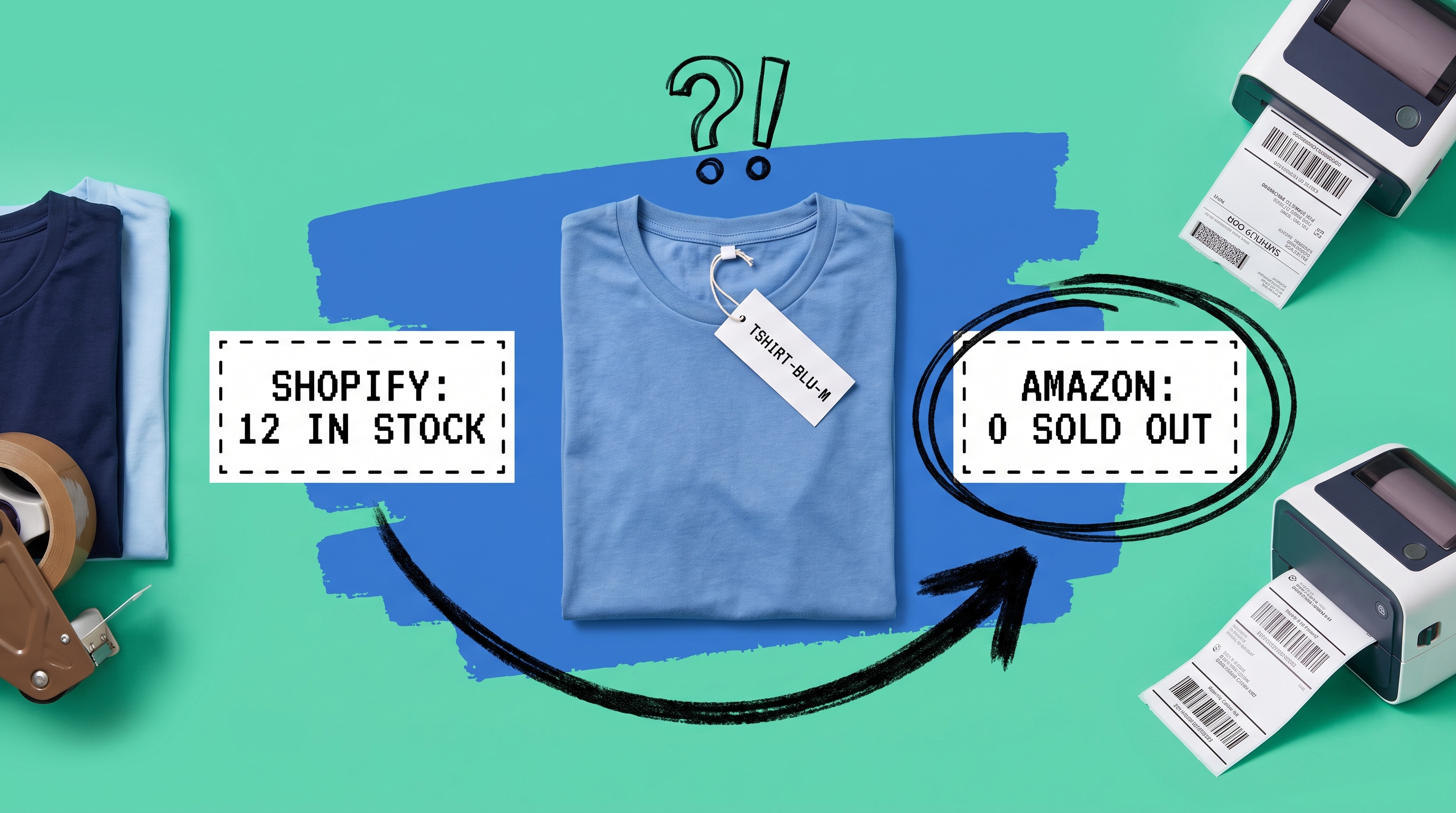
- You've oversold on one channel because another channel sold through a shared SKU (think TSHIRT-BLU-M going to zero on Amazon while your Shopify listing still shows 12 in stock)
- Your team spends an hour or more each day moving order data between systems by hand
- You can't tell, in real time, how much of any SKU is available across all your locations
- Replenishment decisions happen based on gut feel rather than demand data
These aren't minor inconveniences. Overselling costs you customer relationships and triggers marketplace account warnings. Manual data entry creates errors that compound. Without accurate demand data, you either overstock (cash tied up in slow-moving inventory) or understock (missed revenue during peak periods).
What ERP-Grade Inventory Control Looks Like in Practice
You don't need a $200,000 ERP implementation to get the inventory capabilities that matter. The features that make an ERP inventory module valuable are available in platforms built specifically for multi-channel sellers.
OmniOrders gives you:
Real-time multi-location inventory sync. When an order comes in on Amazon, your Shopify and Walmart listings update immediately. You configure stock levels and allocation rules per channel, so you never accidentally oversell.
AI-powered demand forecasting. Instead of guessing when to reorder, the platform analyzes your sales velocity and surfaces replenishment recommendations before you run out. Combine that with your purchase order workflows and replenishment stops being a reactive scramble.
Multi-location and multi-warehouse visibility. Whether you have one DC, multiple owned warehouses, or a mix of 3PLs, warehouse-level inventory tracking shows you what's where. Orders route automatically to the right fulfillment location based on rules you control.
No-code automation rules. You define the logic: route orders over $500 to your East Coast DC, flag any order with a PO box for manual review, auto-tag wholesale orders. The automation rules engine handles the repetitive decisions so your team can focus on exceptions rather than processing every order by hand.
Channel integrations in one place. Connect your selling channels through a centralized setup and manage them all from one dashboard. Orders, inventory, and tracking flow automatically across your stack.
How to Choose Between ERP and Standalone Software
The right question isn't "which has more features?" It's "which gives me the capabilities I actually need, at a cost and timeline that works for my business?"
A few practical questions to guide the decision:
What's your expected deployment timeline? ERP implementations routinely take four to twelve months and often require a dedicated project manager. If you need to be operational in four to six weeks, a standalone platform is the realistic path.
Do you have manufacturing needs? If you buy finished goods and resell them, you don't need ERP-grade manufacturing functionality. If you make what you sell, the production module becomes genuinely relevant.
How many channels do you sell on? The more channels you manage, the more you need a platform built for multi-channel inventory. ERPs weren't designed for simultaneous Shopify and Amazon sync with accurate real-time stock updates.
What does your team look like? ERPs typically require trained administrators and often ongoing consultant support. Standalone platforms are built so your ops team can manage them without specialized ERP expertise.
Who else serves this space? Platforms like Linnworks, Brightpearl, Extensiv Order Manager (formerly Skubana), ChannelAdvisor (Rithum), and Sellercloud all target the mid-market. When you compare them, focus on channel coverage, automation depth, and total cost of ownership, not just the feature checklist.
You Don't Need an ERP to Run Like One
The capabilities that make an ERP inventory module valuable (real-time stock visibility, demand-driven replenishment, multi-location tracking, automated workflows) are available in platforms built specifically for ecommerce. You get the control without the implementation project, the consulting invoice, or the six-month timeline.
OmniOrders centralizes orders, inventory, and fulfillment across every channel in one platform. See what it covers on the OmniOrders features page and start a free trial when you're ready to replace the spreadsheet.
Frequently asked questions
What is the inventory module in ERP?
The inventory module in an ERP is the component that tracks stock levels, purchase orders, warehouse locations, and goods movement across your business. It keeps inventory data synchronized with other ERP functions like accounting and procurement, since the whole system shares one database. For ecommerce operations teams, that tight financial integration is valuable but often comes with an implementation overhead that outweighs the benefit.
What is the difference between ERP and standalone inventory software?
An ERP manages multiple business functions (accounting, HR, manufacturing, inventory) in one connected system. Standalone inventory software focuses specifically on stock tracking, order routing, and fulfillment workflows. For ecommerce brands, standalone platforms typically deploy faster, cost less, and connect more directly to channels like Shopify, Amazon, and Walmart without requiring custom development or a systems integrator.
Do I need an ERP for inventory management?
Not if your primary need is tracking and syncing stock across sales channels and fulfillment locations. A purpose-built inventory management platform handles real-time stock sync, demand forecasting, and multi-location visibility without the ERP's implementation cost or organizational complexity. ERP makes more sense when you also need manufacturing management or deeply integrated financial reporting that flows from inventory directly into your general ledger.
What is the difference between ERP and WMS?
An ERP manages business-wide processes, including inventory at a high level. A WMS (warehouse management system) focuses on the physical operations inside a warehouse: picking, packing, bin locations, and barcode scanning. Many standalone platforms combine both capabilities, managing inventory across channels while also supporting warehouse fulfillment workflows, which is often more practical than bolting a WMS add-on onto a full ERP.
What is the best inventory management software for ecommerce?
The best fit depends on your channel count, order volume, and team size. For multi-channel sellers who need real-time stock sync, automated routing, and channel integrations without a full ERP, common platforms include OmniOrders, Linnworks, Brightpearl, Extensiv Order Manager, and Sellercloud. Evaluate on pre-built connectors to your specific channels, native multi-location support, and automation capabilities that reduce manual handling.
Start your 14-day free trial
See how OmniOrders connects your sales channels, 3PLs, and carriers into one operational layer — free for 14 days, no credit card.