









What Is a 3PL Warehouse? The Complete Guide for Ecommerce Brands
A 3PL warehouse is a storage and fulfillment facility operated by a third-party logistics company. The 3PL receives your inventory, picks and packs individual customer orders, and ships them directly to your buyers. For fast-growing ecommerce brands, third-party logistics warehousing is typically the most practical way to scale fulfillment without the overhead of a warehouse lease or in-house staff. The piece that makes it work cleanly at scale is your order management system, which routes each incoming order to the right 3PL location automatically, so nothing depends on manual handoffs.
What Does a 3PL Warehouse Actually Do?
A third-party logistics warehouse takes over the physical side of your fulfillment operation. Once your inventory arrives, the 3PL is responsible for receiving it, storing it in organized bin or pallet locations, pulling the right items when orders come in, packing them to your specifications, and handing the shipment to a carrier.
In practice, a typical order flow looks like this. A customer orders a TSHIRT-BLU-M on Shopify. Your OMS forwards the order to the 3PL electronically. A warehouse picker pulls the shirt from its storage location, packs it in your branded box with the correct insert, and ships it via USPS Ground Advantage. The tracking number pushes back to Shopify and triggers the customer notification, all without anyone on your team touching the order.
Most 3PL warehouses cover:
- Receiving: counting, inspecting, and barcoding inbound inventory when it arrives
- Storage: slotted bin and pallet locations organized for pick efficiency
- Pick and pack: pulling SKUs by order and packing to your exact specifications
- Shipping: selecting carrier services and tendering the parcel
- Returns processing: receiving customer returns, inspecting condition, and restocking or quarantining
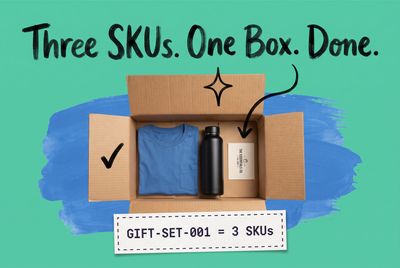
Many 3PLs also offer value-added services: kitting (assembling a GIFT-SET-3PC from three separate SKUs), custom packaging inserts, or retail compliance labeling for wholesale orders destined for a big-box retailer.
How 3PL Pricing Works
Understanding the cost structure helps you evaluate whether outsourcing makes financial sense for your business.
Receiving fees apply when your inventory arrives. Rates typically run $10-$25 per pallet or $0.10-$0.50 per unit depending on SKU complexity and inbound volume.
Storage fees are billed monthly, usually per pallet or per cubic foot. Ambient storage at a mid-market 3PL runs roughly $15-$25 per pallet per month. Temperature-controlled storage costs more.
Pick and pack fees are charged per order and per item. A single-item order often costs $2.50-$4.00 to pick and pack, with each additional item adding $0.25-$0.75. Some 3PLs charge a flat per-order fee and bundle item counts within it.
Carrier rates are usually passed through at the 3PL's negotiated rates, which tend to beat what a direct brand account can achieve because the 3PL aggregates shipping volume across all its clients. A 3PL shipping 50,000 packages per month gets meaningfully better UPS and FedEx rates than a brand shipping 500.
3PL Warehousing vs. In-House Fulfillment
Running your own warehouse gives you direct operational control: you set the picking process, choose the warehouse management system, train the team, and define every workflow. That control comes with fixed costs, including lease, headcount, and equipment, regardless of how many orders you ship in a given month.
Third-party logistics warehousing converts most of those fixed costs to variable ones. You pay per order processed and per pallet stored, so your fulfillment expense scales with revenue. During a slow quarter you are not carrying the overhead of an empty warehouse.
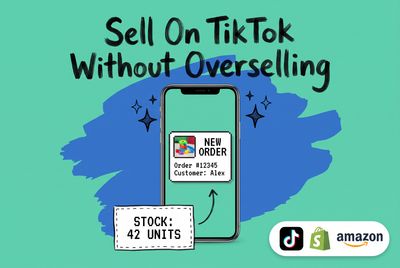
The real trade-off is visibility and speed of information. When your stock sits in a facility you do not operate, you depend on the 3PL's data feeds to know what is actually on the shelf. Brands that handle this well sync their inventory counts across sales channels in real time, so the available-to-sell number shown on Amazon, Shopify, or Walmart always reflects what the 3PL physically has. Those that do not end up overselling and generating customer complaints.
We cover the full cost comparison, including the order volume where in-house typically stops making financial sense, in 3PL vs. in-house fulfillment.
How to Choose a 3PL Warehouse
Choosing a 3PL is not purely a price-per-pick decision. The right partner depends on where your customers live, what your SKU mix looks like, and how much control you need over packaging and the unboxing experience.
Location and geography. A single warehouse in New Jersey may work if most of your orders ship to the Northeast. Add a location in Los Angeles or Dallas and you cut transit times for West Coast buyers by one to two days, reducing both carrier costs and delivery complaints. For international sales, find a 3PL with experience handling customs documentation and duty-paid shipping options.
WMS capability and data accuracy. Real-time inventory feeds are non-negotiable. A 3PL that sends stock updates once a day leaves you flying blind between batches, and that gap creates oversell risk on marketplaces like Amazon or Walmart, where inventory accuracy directly affects your seller metrics. Ask whether they push inventory updates per transaction or on a fixed schedule.
Integration capability. The 3PL's system needs to connect to your OMS cleanly. Manual CSV exports and email-based order confirmations do not scale beyond a few hundred orders per month. A 3PL with API connectivity or pre-built connector support is far easier to operate at volume.
Pick accuracy. Ask for their documented pick accuracy rate. 98.5% or better is a reasonable benchmark. A 1% error rate on 10,000 monthly orders means 100 wrong shipments, each generating a support ticket and likely a return.
Returns handling. If returns exceed 5% of your order volume, ask specifically where they are processed. Some 3PLs route returns to a separate facility, which adds transit time before restocked inventory becomes available again.
For a structured framework for vetting providers, see our guide on how to choose a 3PL partner.
The Operational Gap That Appears at Scale
A 3PL warehouse solves the physical problem of fulfillment. It does not solve the data problem of knowing which orders to send there, in what priority, from which inventory pool. That is the job of your OMS.
Without that routing layer, the manual process looks familiar to most growing brands. Orders arrive from Shopify, Amazon, and Walmart. Someone downloads reports from each platform, filters them, and emails a pick list to the 3PL. The 3PL ships the orders. Tracking numbers come back hours later in a spreadsheet. Someone updates each channel manually. Inventory counts slowly drift out of sync. You oversell a product that sold out at the warehouse two hours ago.
When you add a second 3PL location, or a second sales channel, this process stops working.
With an OMS routing layer, orders flow directly from your sales channels to the correct 3PL based on rules you define. An order for SNEAKER-WHT-10 going to a California address gets routed to your Los Angeles 3PL if stock is available there. If that location is out, the rule falls over to your East Coast partner automatically. No one on your team makes that call per order.
How OmniOrders Works With Your 3PL Warehouse
OmniOrders integrates with fulfillment partners including Shipedge, Xenvio, BinLogic, and Shopify Fulfillment. After completing your channel and fulfillment integration setup, orders from every connected sales channel route to the correct 3PL automatically, with tracking data pushed back to each channel as shipments confirm.
The platform's no-code automation engine lets you define routing rules that match your specific business logic. You can route by geography, SKU category, carrier preference, or order value, and you can configure those rules yourself without writing any code. If your operation spans multiple warehouse locations, OmniOrders manages stock allocation and routing across all of them from one dashboard.
Real-time inventory sync keeps every connected channel accurate. When your 3PL ships a DENIM-SLIM-32-34, OmniOrders subtracts that unit from the available count on Shopify, Amazon, and Walmart simultaneously. Each platform sees the correct number, not a count from last night's batch file.
As you grow, adding a new 3PL partner or a new sales channel does not require rebuilding your workflows. You add the location, configure the routing rules, and it starts receiving orders.
Connect Your 3PL to Every Sales Channel
Your 3PL handles the physical work of fulfillment. OmniOrders handles the routing logic, real-time inventory sync, and channel connectivity that makes multi-location, multi-channel fulfillment manageable. Start your free OmniOrders trial and see how fast-growing brands centralize their 3PL operations in one place.
Frequently asked questions
What is a 3PL warehouse?
A 3PL warehouse is a storage and fulfillment facility run by a third-party logistics company. The 3PL stores your inventory, picks and packs individual orders, and ships them to your customers on your behalf. Brands use third-party warehouses to scale fulfillment without leasing warehouse space or managing fulfillment staff directly.
What is 3PL warehousing?
3PL warehousing is the practice of outsourcing inventory storage and order fulfillment to a third-party provider. The provider handles receiving, storage, pick and pack, shipping, and often returns. Costs are variable, meaning they are tied to order volume and storage usage rather than fixed lease and payroll commitments, which gives growing brands more financial flexibility.
What is a 3PL company?
A 3PL company (short for third-party logistics company) is a business that provides outsourced logistics services including warehousing, order fulfillment, carrier management, and shipping. The "third-party" label means the logistics provider is separate from the brand (first party) and the end customer (second party).
What are 3PL warehousing services?
3PL warehousing services typically include inventory receiving, storage, order pick and pack, shipping label generation, and carrier handoff. Many providers also offer kitting, custom packaging, retail compliance labeling, and returns processing as add-on services billed separately from standard per-order fees.
What is the difference between a 3PL and a fulfillment center?
The terms are often used interchangeably. Technically, a fulfillment center is the physical warehouse building, while a 3PL refers to the company that operates it. When a brand says it uses a 3PL, it typically means an outside company that provides fulfillment services from one or more warehouse locations it operates.
Start your 14-day free trial
See how OmniOrders connects your sales channels, 3PLs, and carriers into one operational layer — free for 14 days, no credit card.