










Inventory Optimization Software: When to Move Beyond Spreadsheets and Manual Replenishment
Inventory optimization software is a category of tools that calculates reorder points, safety stock levels, and purchase quantities using sales velocity, lead times, and demand patterns rather than manual estimates or gut feel. The goal is to keep the right amount of stock at each location without tying up cash in slow-moving inventory. For multi-channel ecommerce brands, that requires real-time visibility across every sales channel feeding a single decision engine, not a nightly batch sync that's already stale before the business day starts.
What Inventory Optimization Software Actually Does
Basic inventory management tells you what you have. Inventory optimization tells you what you should have and how to get there.
A capable system handles several things: demand forecasting based on sales history and channel velocity; reorder point calculation that accounts for supplier lead times; safety stock modeling that distinguishes a lumpy seasonal SKU from a steady everyday seller; and purchase order generation triggered by stock thresholds rather than a monthly calendar reminder.
Getting any one of these wrong costs money. Holding 500 units of TSHIRT-GRY-XL because last October spiked ties up capital for months. Running out of TSHIRT-GRY-M for five days during peak season costs revenue you can't recover. Inventory optimization closes the gap between those two failures.
The Spreadsheet Phase: Where It Works and Where It Breaks
Spreadsheets are a reasonable start when you carry 50 SKUs across two channels. A weekly reorder sheet with lead time buffers and seasonal notes will keep you from running out. You can model basic safety stock without writing a line of code.
The cracks appear fast as you grow. At 300 SKUs across Shopify, Amazon, and Walmart, that spreadsheet becomes a part-time job. You're exporting files from multiple platforms, reconciling channel inventory counts manually, and making replenishment decisions on data that's already hours old by the time you act on it.
The real cost isn't the maintenance time. It's the lag. A purchase order submitted Monday morning reflects Monday morning's inventory snapshot. If Sunday drove unexpected velocity on Amazon, that order is wrong before it's submitted. The more channels you run, the worse the lag compounds.
Why Standalone Optimization Tools Have a Ceiling
Dedicated inventory planning software like Netstock and Optiply are genuinely capable at statistical forecasting and reorder point calculations. For a single-channel operation with a simple tech stack, a point solution can work.
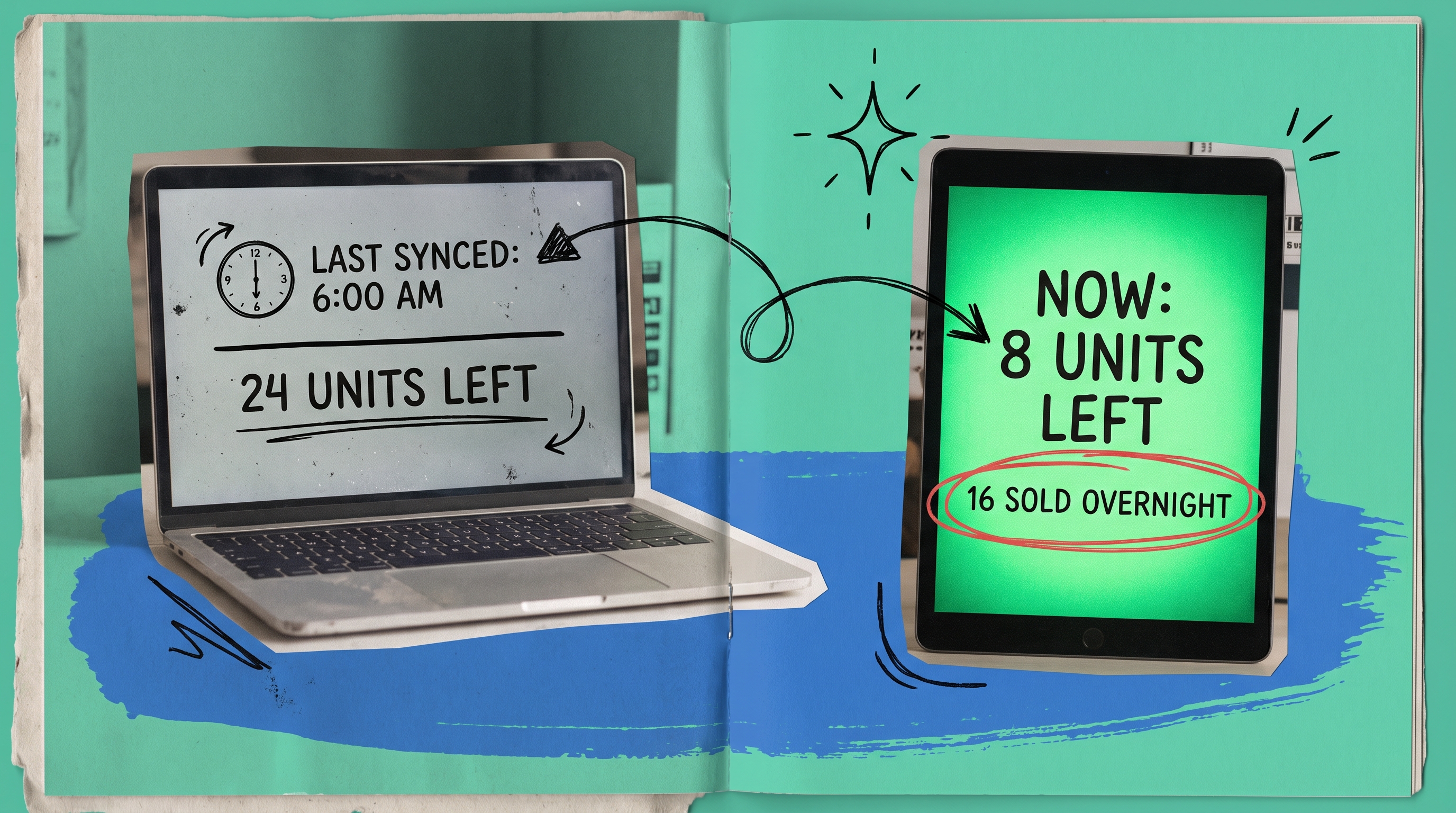
The gap shows up in integration. A standalone tool pulls your inventory data through a scheduled sync. If your Shopify channel fires 40 orders overnight and the optimization engine syncs at 6 AM, six hours of velocity is invisible to the tool that's supposed to prevent your stockout. The forecast is always a little stale.
These tools also stop at the recommendation. A standalone tool tells you to order 200 units of HEADSET-BLK-USB. It doesn't create the purchase order, route the inbound shipment to the correct warehouse location, or update your channel inventory after receiving. You're either doing that manually or building middleware to connect the pieces. That integration debt grows every time you add a supplier, a channel, or a warehouse location.
How an OMS Handles Inventory Optimization
A modern order management system sits at the intersection of channel data, inventory positions, and fulfillment actions. That makes it the right place to run optimization logic, because the demand signal and the stock position are always current and in the same system.
OmniOrders provides real-time multi-channel inventory management alongside AI-powered demand forecasting in one platform. When a Shopify order ships, inventory syncs across every connected channel immediately. No batch delay. No stale count triggering a false reorder.
For a brand selling JACKET-NVY-L on both Shopify and Amazon simultaneously, that matters. The system sees both channels draining the same inventory pool and incorporates both demand streams into the forecast, rather than treating one channel's velocity as the whole picture.
Inventory Replenishment Automation: What Good Looks Like
Good replenishment automation runs quietly in the background. You configure the parameters once, and the system handles the routine while surfacing exceptions that need human judgment.
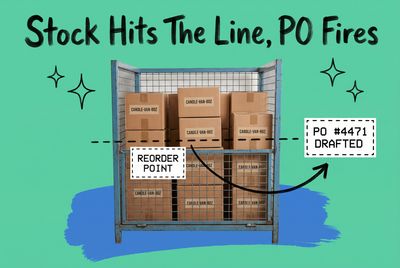
With OmniOrders, you define the reorder point, the order quantity based on your supplier's minimum order quantity or economic order quantity logic, and your preferred supplier. When stock levels hit that threshold, the system generates a purchase order for review or sends it automatically, depending on your workflow configuration.
You can build automation rules that apply different replenishment logic to different SKU classes. A fast-moving SKU with a 5-day lead time needs a different reorder point than a slow-moving SKU with a 14-day lead time. Applying the same buffer to both guarantees you're overstocked on one or understocked on the other. Classification lets the system match the logic to the SKU.
For a brand running 300 active SKUs, this removes the weekly replenishment review meeting from the calendar. Exceptions surface. Routine reorders run.
Demand Planning Across Multiple Locations
If you fulfill from more than one warehouse or 3PL location, the replenishment question is more complex than "when to reorder." You also need to decide where to position inventory.
Holding your entire stock in one eastern warehouse while your West Coast channel drives high velocity means every West Coast order ships cross-country. Customers wait longer and your carrier costs climb. For brands running multiple 3PL relationships or a ship-from-store model, this becomes a meaningful cost that grows with order volume.
OmniOrders tracks inventory positions at each location and factors in location-level demand velocity when generating reorder recommendations. When you need to decide whether to replenish your Chicago or Dallas location first, the system uses each location's current sell-through rate, not just the aggregate SKU count across your catalog.
AI Inventory Management: What the Forecasting Does in Practice
The AI label gets applied to tools running basic moving averages. Worth being specific about what the OmniOrders forecasting actually handles.
The demand forecasting function detects trend and seasonality at the SKU level from your actual sales history. For a business with clear seasonal patterns, a static reorder point will either overbuy in slow months or stock out in peak months. A seasonality-aware model adjusts the reorder point and safety stock as demand patterns shift through the year.
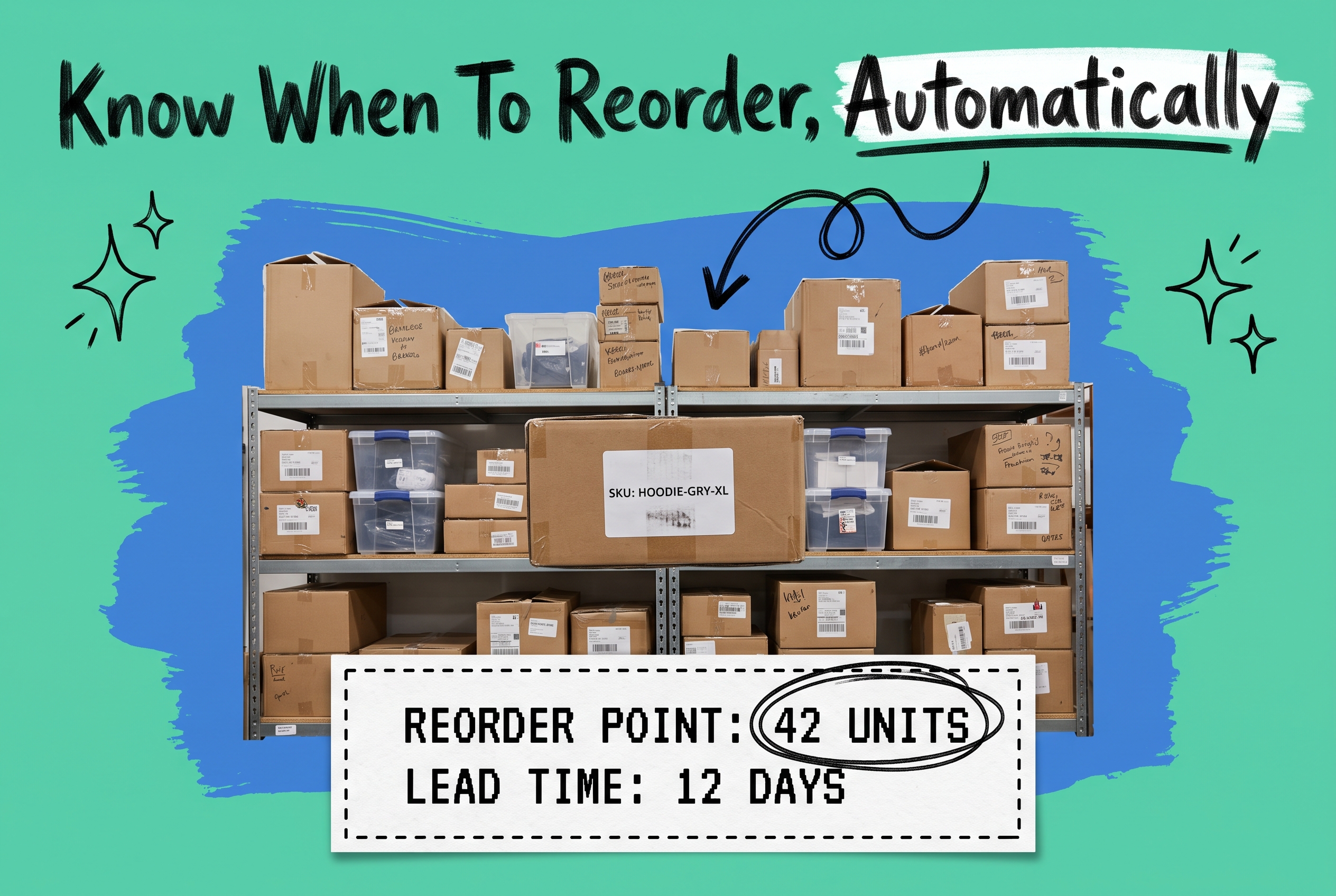
The system also accounts for lead time variability. If your supplier for HOODIE-GRY-XL consistently delivers in 12 days but occasionally runs to 18, the safety stock calculation needs to reflect that range, not just the average. Most spreadsheet-based approaches use the average lead time, which under-buffers for the variance and creates stockouts that cluster around the outlier delivery events.
One honest caveat: for new SKUs with no sales history, you'll still set initial parameters manually. The model works from your data. It does not predict demand for a product you've never sold.
When You're Ready to Move Beyond Manual Replenishment
A few reliable signals:
You're spending several hours a week pulling reports and checking reorder triggers manually across your catalog. Your team regularly swings between overstock and stockouts without a reliable way to predict which direction you're heading. Your inventory counts are inconsistent across channels because syncing them requires manual reconciliation. Replenishment decisions depend on a single person who holds the institutional knowledge of what to order and when.
When those patterns are consistent, the question isn't whether you need inventory optimization capability. The question is whether you need it as a standalone tool with its own integration overhead, or built into the platform already running your orders and fulfillment.
Get Inventory and Replenishment Running From One Platform
OmniOrders combines order management, real-time inventory sync, AI demand forecasting, and automated replenishment in one platform. Your team stops maintaining spreadsheets and starts managing exceptions instead of creating them.
If your replenishment is still manual or your channel counts are inconsistent, see the forecasting running on your actual catalog. Explore OmniOrders features and connect your channels in under a day.
Frequently asked questions
What is inventory optimization?
Inventory optimization is the process of determining the right stock level, reorder point, and order quantity for each SKU based on demand patterns, supplier lead times, and service level targets. The goal is to fulfill orders reliably without holding excess inventory that drains working capital. A well-implemented system combines demand forecasting, safety stock modeling, and replenishment automation into one continuous workflow.
What are the main inventory optimization techniques?
The most widely used techniques are: economic order quantity (EOQ), which calculates the lowest-cost order size given carrying and ordering costs; reorder point modeling, which sets the stock level that triggers a purchase order before you run out; safety stock calculation using demand variance and lead time variability; and ABC/XYZ classification, which segments SKUs by revenue contribution and demand predictability. Applying the right technique to each SKU class produces better results than using a single formula across your entire catalog.
What should I look for in inventory forecasting software?
Look for live channel integration rather than scheduled syncs, SKU-level demand classification that handles seasonality and trend separately, configurable safety stock parameters, and automatic reorder triggers that create a purchase order without manual intervention. The most important functional requirement is that the forecast connects to a replenishment action, not just a recommendation you still have to execute manually.
How does ecommerce inventory optimization differ from traditional inventory management?
Traditional inventory management typically handles one demand stream from one channel. Ecommerce inventory optimization has to account for multiple channels draining the same physical inventory pool simultaneously. A sale on Amazon and a sale on Shopify both reduce the same SKU count, and the optimization system needs real-time visibility across all channels to calculate accurate reorder points. Single-channel tools systematically underestimate reorder frequency for high-velocity SKUs selling across multiple platforms.
Do I need separate inventory optimization tools if I already use an OMS?
Not if your OMS includes built-in AI forecasting and automated replenishment. Integrated optimization keeps the demand signal, inventory position, and replenishment action in the same system, eliminating the sync lag you get when bridging a standalone optimization tool to your OMS through an integration. A separate tool only makes sense when your OMS has no native forecasting capability and building the integration is cheaper than switching platforms.
Start your 14-day free trial
See how OmniOrders connects your sales channels, 3PLs, and carriers into one operational layer — free for 14 days, no credit card.