










Inventory Financing for Ecommerce: How to Fund Your Next PO Without Draining Cash
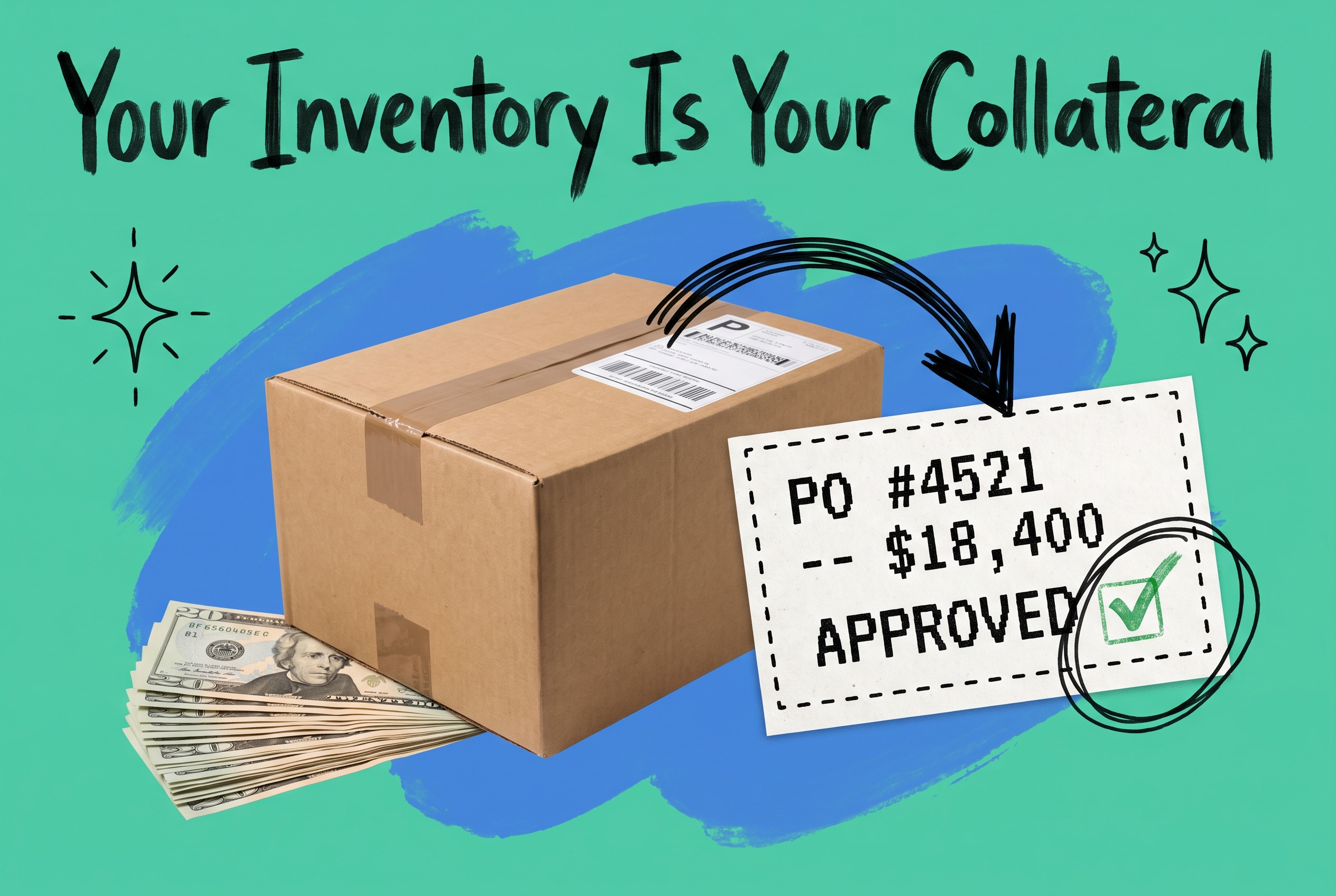
Inventory financing is short-term credit that lets ecommerce businesses borrow against the value of purchased or incoming inventory. Instead of tying up all your working capital in stock, you pledge the goods themselves as collateral, which means you can place a large seasonal purchase order without emptying your cash reserves. Lenders advance a percentage of the inventory's value, you use the funds to pay your supplier, and you repay as the goods sell.
What Is Inventory Financing?
Inventory financing is a category of asset-based lending where your stock on hand, or incoming purchase orders, serves as collateral. Unlike an unsecured business loan, approval and loan amount depend directly on the quality and sellability of your inventory.
For ecommerce brands, this matters because the biggest growth constraint is usually capital timing. You need to pay a supplier 30 to 60 days before those goods hit a customer's door, let alone before a marketplace clears the payment. Inventory financing bridges that gap.
Two main forms exist:
- Inventory loans: You borrow a lump sum against goods you already own or have in transit. Lenders typically advance 50% to 80% of the inventory's appraised value.
- Purchase order financing: A lender pays your supplier directly, covering the cost of a confirmed purchase order. You repay once the goods arrive and generate revenue.
Both are ecommerce working capital tools, but they serve different moments in the fulfillment cycle.
How Does Purchase Order Financing Work?
Purchase order (PO) financing follows a clear sequence:
- You receive a confirmed order from a retailer or marketplace, or you place a large restocking PO with your supplier.
- You apply to a PO financing company with the purchase order, your supplier details, and sometimes proof of historical sales velocity.
- The lender verifies the order and pays your supplier directly, usually covering 70% to 100% of the supplier invoice.
- Goods are produced, shipped, and delivered to your fulfillment center or directly to your customer.
- You repay the lender, plus fees, from the proceeds of the sale.
Fees for PO financing are higher than a standard bank loan, often 2% to 6% per month, because the lender takes on supplier execution risk. That said, it lets you fulfill orders you'd otherwise have to decline because you couldn't front the supplier payment.
One thing most lenders need before they'll say yes: evidence that you can actually move the inventory. Sales history, channel data, and real-time stock records all factor into their confidence. This is where your operations platform becomes part of your financing story.
Inventory Financing vs a Business Loan: What's the Difference?
The core distinction is collateral. A traditional business loan uses your general creditworthiness, revenue, and business assets. An inventory loan uses the stock itself.
Here's what that means in practice:
Factor | Business Loan | Inventory Financing |
|---|---|---|
Collateral | Business assets, personal guarantee | Inventory or purchase order |
Approval speed | Days to weeks | 24 to 72 hours |
Credit weight | High | Lower |
Loan amount tied to | Revenue, credit score | Inventory value |
Best for | Long-term capital needs | Specific stock purchase cycles |
For a fast-growing multi-channel brand that's asset-rich in inventory but cash-constrained between payables and receivables, inventory financing is often the faster path. You're not waiting on a bank to assess three years of tax returns.
Inventory financing doesn't replace a business line of credit. The two work together. You might carry a revolving credit line for operational costs and use inventory funding for a specific Q4 production run or a large wholesale order.
Inventory Financing for Small Ecommerce Businesses
Smaller brands often assume inventory financing is reserved for established companies with significant revenue. That's not always the case, though qualification is harder without much sales history.
What lenders actually look for:
- Proven demand. At least 6 to 12 months of sales data on the specific SKUs you want to finance. A product with no track record is harder to collateralize because the lender can't value it confidently.
- Liquid inventory. Goods that can sell quickly if the lender needs to liquidate them. Seasonal items near peak season, fast-moving consumables, and standard-size apparel are easier to finance than niche industrial parts.
- Supplier credibility. For PO financing especially, lenders want to know your manufacturer delivers on time and to spec.
- Accurate stock data. This is the factor that trips up more small brands than any other. If your inventory counts don't reconcile across your Shopify store, your Amazon seller account, and your warehouse, lenders read that as operational risk.
The small brands that qualify most consistently have one thing in common: clean, centralized inventory records they can pull up in minutes.
Why Your Inventory Data Is Your Collateral
Lenders don't just evaluate what inventory you have. They evaluate how well you know it.
A careful lender will want to see inventory value at cost, sell-through velocity by SKU, COGS data, and where stock is physically located, whether that's a 3PL, your own warehouse, or Amazon FBA. If you're running stock counts in a spreadsheet updated weekly, you'll struggle to produce those numbers confidently or quickly.
This is where multi-channel inventory management becomes a financing asset, not just an operations tool. When all your stock data lives in a single system that syncs across every sales channel in real time, you can generate an accurate inventory report in minutes. That report, showing live quantities, cost per unit, days of supply, and channel-level sell-through, is exactly what a lender's underwriter needs to size your loan.
When you manage inventory across all your channels from one place, you also solve a problem lenders see constantly: phantom stock from failed syncs. Brands running Amazon, Shopify, and Walmart separately sometimes show inflated numbers on one channel because a sale on another hasn't synced yet. A lender who spot-checks your inventory and finds discrepancies between what you claim and what your channels show will reduce the loan offer, or decline entirely.
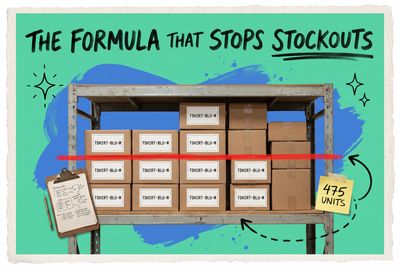
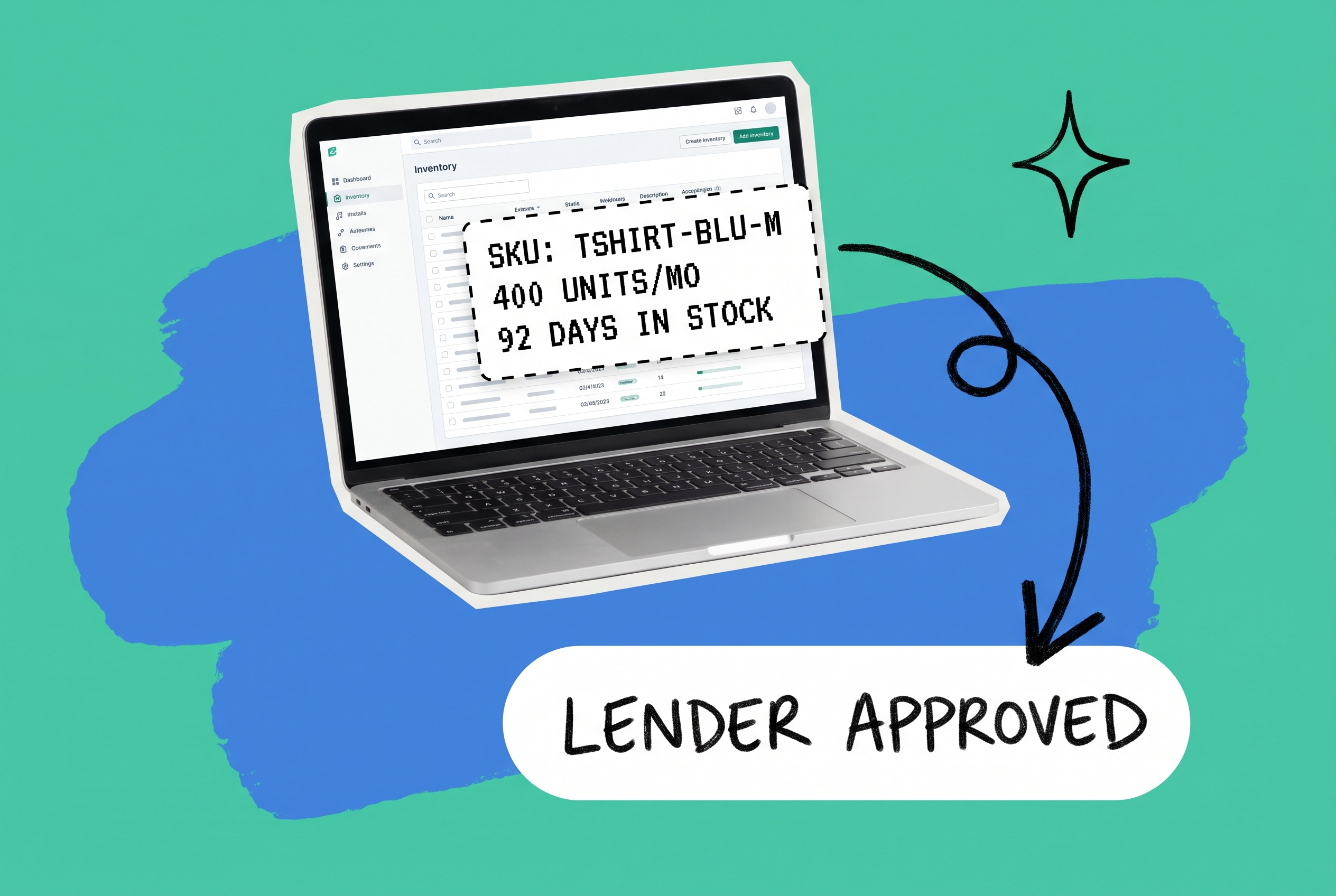
Clean inventory data also supports the PO financing case. If a lender can see that SKU TSHIRT-BLU-M sells 400 units per month with a 92-day average time in stock, they have real evidence the product is liquid. "It sells well on Amazon" is not a data point. It's a hope.
The Best Inventory Financing Companies: What to Know
No single lender is the best fit for every ecommerce brand. The right choice depends on your order volume, channel mix, and fulfillment setup.
Categories to consider:
- Traditional asset-based lenders: Banks and credit unions that offer inventory lines of credit at lower rates, but with slower approval and stricter documentation. Better for brands with 2+ years of operating history and clean books.
- Fintech inventory lenders: Companies that specialize in ecommerce and can connect directly to your sales channels. They tend to approve faster and offer dynamic loan amounts based on real-time sell-through. Approval often takes 24 to 72 hours.
- Purchase order financing companies: Focused on one PO at a time. Useful for brands receiving a large wholesale or retail distribution order they lack the cash to fulfill.
- Revenue-based financing (RBF): Not strictly inventory financing, but some brands use it to cover inventory purchases. Repayment scales with monthly revenue, which smooths cash flow compared to fixed loan payments.
Before approaching any lender, pull together your inventory data, 12 months of sales by channel, your supplier payment terms, and gross margin by product category. Lenders who specialize in ecommerce will ask for all of it.
It also helps to understand how your multi-channel order management system handles the full purchase order cycle, because some fintech lenders integrate directly with operations platforms to verify order data in real time. The cleaner your operations stack, the faster underwriting moves.
Building the Inventory Data Trail Lenders Expect
Whether you're six months from your first financing application or ready to apply now, there are concrete steps to get your data into shape.
Centralize stock counts. If any of your inventory lives outside a master system (a whiteboard, a spreadsheet, a channel-specific report), bring it in. Discrepancies between channels are the most common reason lenders lower their offer.
Track cost basis consistently. Lenders need to see what you paid for inventory, not just what you're selling it for. Managing your stock levels with cost-of-goods tracking at the SKU level gives you a clean cost basis to present at any point in the loan cycle.
Log purchase orders formally. Every supplier order should exist as a structured document with SKUs, quantities, unit costs, and delivery timelines. If you've been managing this over email threads, switching to formal purchase orders now builds the paper trail lenders want to see: a consistent history of fulfilled POs with a reliable supplier.
Keep your physical counts tight. Lenders sometimes require a physical inventory count or third-party verification before advancing funds. Our guide to physical inventory count best practices walks through how to run a count that closes the gap between system records and shelf reality, which is the number a lender will actually fund against.
Turn Your Inventory Data Into a Financing Asset
Inventory financing gives ecommerce brands a way to grow without waiting for cash to catch up to demand. The brands that get the best terms aren't the ones with the most inventory. They're the ones with the clearest picture of it.
OmniOrders gives you that picture: real-time stock sync across every sales channel, structured purchase order management, and the multi-location inventory visibility that any lender's underwriter can actually rely on. When it's time to apply for an inventory loan or approach a PO financing company, your data package is already built.
Start your free OmniOrders trial and see how much cleaner your inventory data looks in 30 days.
Frequently asked questions
What is inventory financing?
Inventory financing is a type of short-term, asset-based credit where a business uses purchased or incoming inventory as collateral to secure a loan or line of credit. The lender advances a percentage of the inventory's appraised value, typically 50% to 80%, and the borrower repays as the goods sell. It's built for businesses that need to bridge the gap between paying suppliers and receiving customer revenue.
How does purchase order financing work?
Purchase order financing is a form of inventory financing where a lender pays your supplier directly on the basis of a confirmed purchase order. You apply with the PO in hand, the lender verifies the order and your supplier's credibility, then funds the supplier invoice. You repay the lender, including fees, once the goods generate revenue. Fees typically run 2% to 6% per month and reflect the lender's risk on supplier execution.
What is the difference between inventory financing and a business loan?
The main difference is collateral. Inventory financing is secured by the physical stock itself, so lenders weigh your inventory's value and liquidity rather than your overall credit history. A traditional business loan relies on your business's general creditworthiness, revenue track record, and sometimes a personal guarantee. Inventory financing tends to close faster and requires less credit history, but carries higher fees than a bank line of credit.
Is inventory financing available for small ecommerce businesses?
Yes, though qualification is stricter without deep sales history. Most lenders want at least 6 to 12 months of proven demand for the specific SKUs you want to finance, consistent gross margins, and clean inventory records. Small brands with accurate, centralized stock data and reliable suppliers can qualify, even without large revenue. The single biggest barrier for small businesses is inventory data quality, not revenue size alone.
What do inventory financing companies look for?
Lenders evaluate inventory liquidity (how quickly the goods can sell), accurate stock counts and cost basis, sales velocity by SKU, supplier payment history, and your ability to produce real-time inventory reports. Brands with centralized multi-channel inventory management tend to move through underwriting faster because they can provide all of this data quickly and without reconciliation errors.
Start your 14-day free trial
See how OmniOrders connects your sales channels, 3PLs, and carriers into one operational layer — free for 14 days, no credit card.