










Chargeback Prevention: A Merchant's Guide to Reducing Disputes (and Winning the Ones You Get)
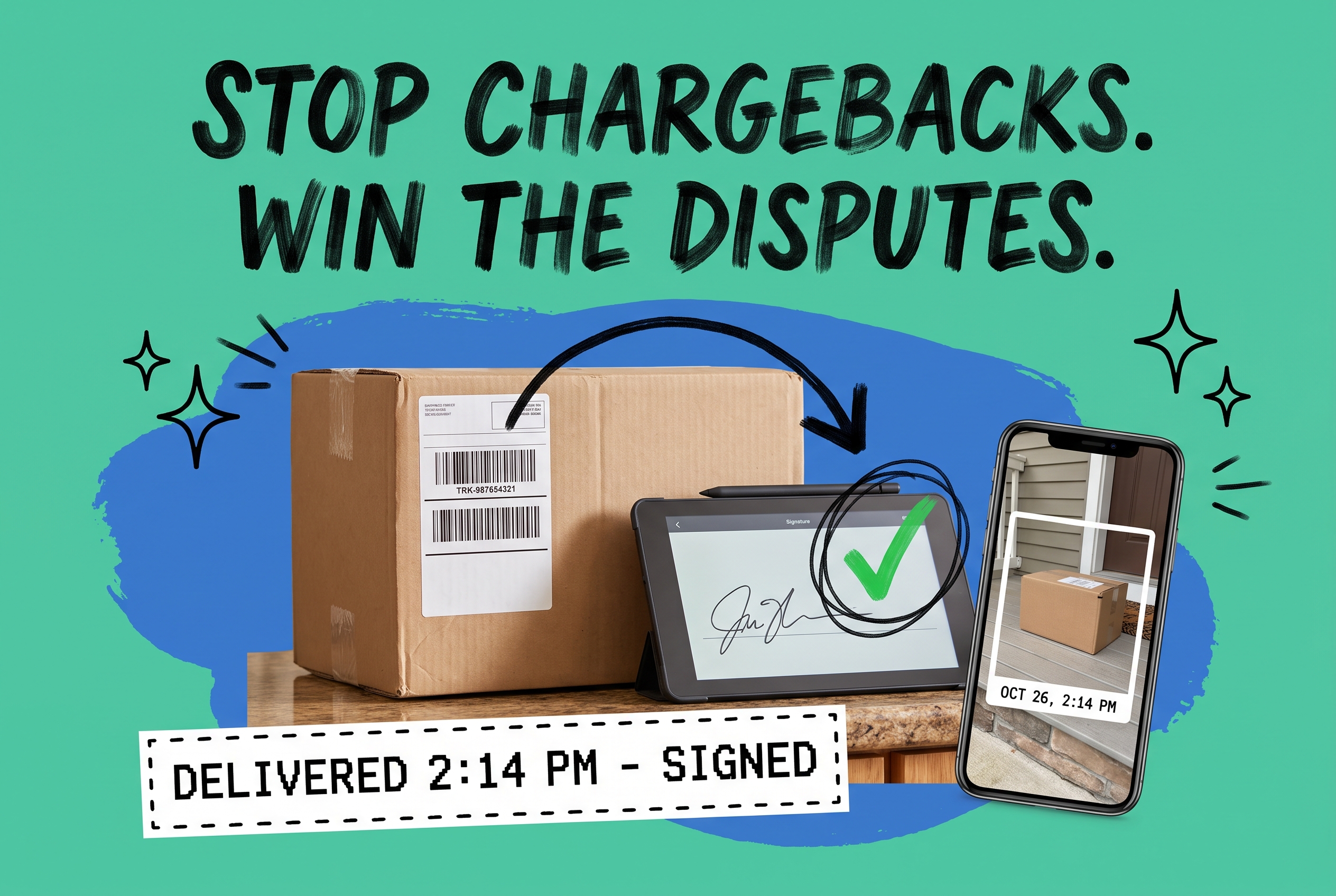
A chargeback hits. The processor pulls the funds. Now you have 72 hours to assemble evidence you may not have thought to keep.
If that scenario sounds familiar, you already know the problem isn't just the lost revenue. It's the $20–$50 dispute fee stacked on top. The inventory you can't recover. And if your chargeback ratio climbs above 1%, you risk losing your merchant account entirely — which isn't a theoretical threat. Card networks will pull your processing privileges.
This guide covers how to prevent chargebacks before they happen and how to win the ones you can't avoid.
Two types of chargebacks — and why the difference matters
Treating all chargebacks the same is how merchants waste money on fraud screening and still lose disputes.
True fraud is what most people picture: a stolen card number used to place an order. The real cardholder had nothing to do with it. These chargebacks are legitimate. Your defense is screening orders before they ship — stopping the bad order from leaving your warehouse in the first place.
Friendly fraud is harder to deal with. The cardholder actually placed the order. Then disputed it anyway — claiming non-delivery, item not as described, or unrecognized charge. Some of these are honest mistakes (a spouse placing an order the other forgot about). Many aren't. Estimates of intentional friendly fraud vary widely by industry — anywhere from under half to a clear majority of disputes, depending on the study and how a processor classifies ambiguous cases.
The card networks treat these the same way. In both cases, the burden of proof is on you.
But what you're proving — and how you get that evidence — is completely different. For true fraud, you need better screening upstream. For friendly fraud, you need documentation. And the merchants who consistently win disputes are the ones who've built documentation into their fulfillment workflow before a dispute ever lands.
Preventing chargebacks at order intake
Stopping true fraud before the order ships.
AVS and CVV matching are the baseline. AVS (Address Verification Service) compares the billing address the customer entered against what's on file with their card issuer. A mismatch is a signal, not automatic fraud — billing addresses go stale all the time. CVV mismatch is a stronger signal: most stolen card data sold online doesn't include the security code. Configure your payment gateway to decline CVV failures, or route them to manual review rather than auto-approving.
Fraud scoring assigns a risk level based on behavioral patterns: first-time buyer placing a high-value order, billing and shipping address in different states, email domain registered hours before the purchase, expedited shipping selected. Tools like Signifyd, Kount, and Stripe Radar handle this automatically. Set three buckets: auto-approve, manual review, and decline. The thresholds depend on your average order value and your chargeback rate — if your base rate is already low, you can set tighter auto-approve criteria.
Order velocity rules catch account takeovers. A compromised account placing ten orders in four hours isn't a loyal customer — it's a pattern to stop. Set limits per account, per email, and per device fingerprint.
Address validation adds a layer that AVS alone misses. Flagging shipments to known freight forwarders, reshipping services, or flagged postal codes catches fraud patterns that card-level verification won't surface.
One thing merchants often overlook: these controls only work if they're automated. If your team is manually reviewing every order above a certain value, you're either missing things (when volume spikes) or burning time on safe orders. These need to be rules in your order management workflow — flagged orders held for review, not canceled, while someone makes the call.
Preventing chargebacks at fulfillment: building the evidence trail
For friendly fraud, the dispute process is a documentation competition.
Here's what you need — and need to produce quickly — when a chargeback notification comes in:
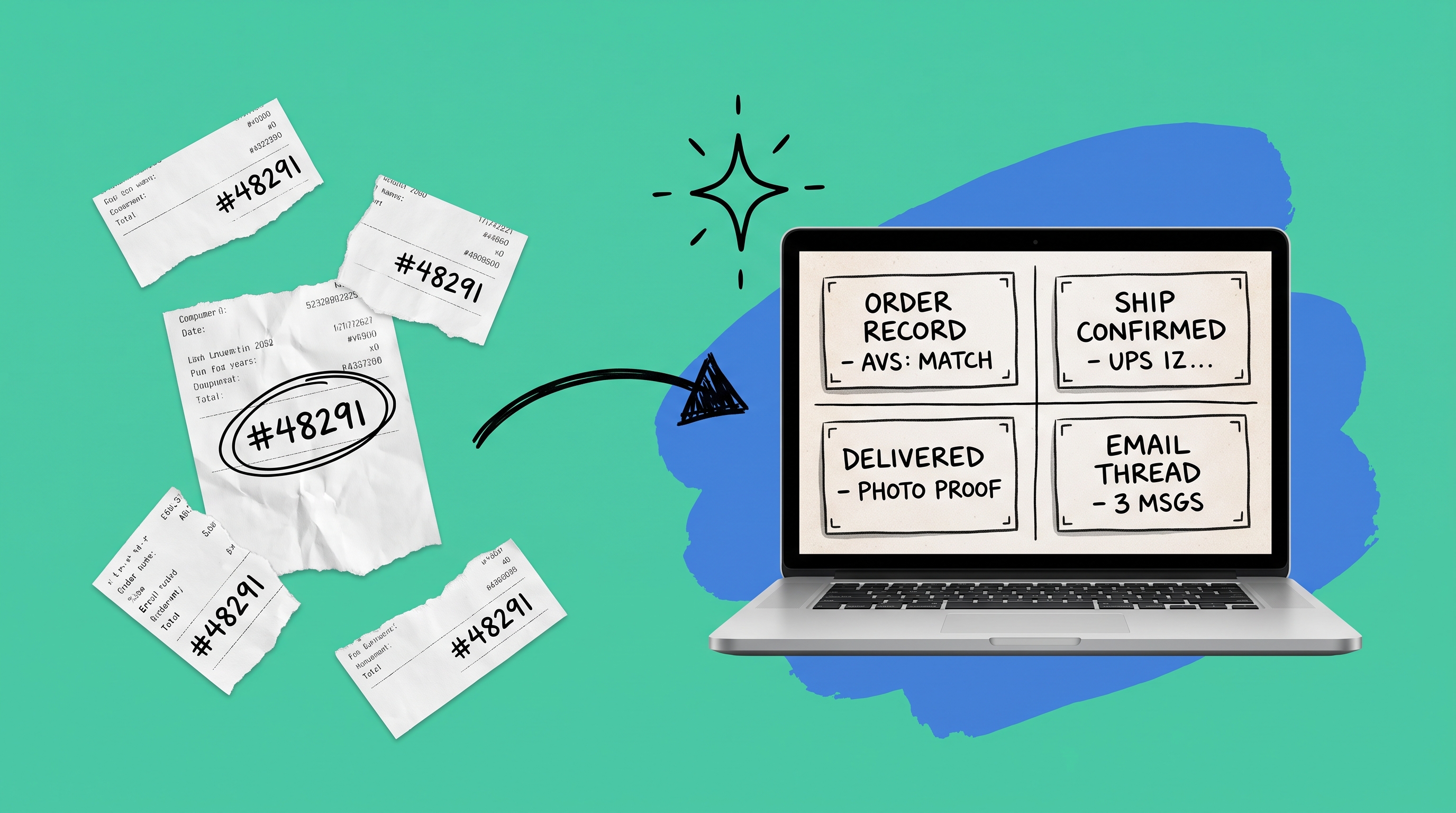
Complete order record: Purchase timestamp, billing and shipping address, customer email, IP address, device type, and AVS/CVV verification result. This establishes that whoever placed the order had access to the correct card details and billing information — making the "I never placed this order" claim hard to sustain.
Shipping confirmation: Carrier, tracking number, date shipped, service level. Not a record that the order "shipped" in your system, but proof it was tendered to the carrier on the date you claim.
Delivery confirmation: A carrier scan confirming the package reached the delivery address. If your carrier offers photo proof of delivery — UPS and FedEx offer this on ground shipments at no extra charge — attach it. A timestamped photo of the package at the correct address is difficult to argue against.
Communication trail: The order confirmation email sent to the customer (with all order details), the shipping notification with tracking number, and any customer service exchange that happened before the dispute. A buyer who emails you about the delivery date and then files a "never received" dispute is telling a story your records can contradict.
Signature confirmation on high-value orders: A signed receipt is your strongest evidence for "not delivered" claims. Whether it's worth the cost depends on your average order value and carrier rates. For most merchants, the threshold lands somewhere between $100 and $250 — below that, signature required adds cost that exceeds the expected chargeback savings.
The problem most merchants hit: this evidence lives in four places. Order details in the payment gateway. Carrier confirmation in a separate portal. Customer emails in a different inbox. When a chargeback arrives with a 72-hour response window, spending 45 minutes manually reconstructing one order from multiple systems is time you don't have.
Multi-channel order management changes this directly. When orders from Shopify, Amazon, eBay, and Walmart all route through one system, the complete order record — carrier data, fulfillment timestamps, address verification results — is in one place. Pulling the evidence package for a dispute takes minutes instead of an hour.
When a chargeback lands: how to respond
Miss the response window and you automatically lose. Typical windows are 30–45 days from the notification date, but they vary by card network and processor. Set calendar reminders.
Decide which disputes to fight. Not every chargeback is worth responding to. If the order was $30, the dispute fee is $25, and you spend 20 minutes preparing a response, you've lost money even if you win. Most merchants set a minimum order value — anything below $50 or $60 gets absorbed rather than disputed. It's an uncomfortable math, but it's the right math.
Build a response template by reason code. "Item not received" needs carrier confirmation and photo proof of delivery. "Not as described" needs product photos and the return policy the customer agreed to at checkout. "Unrecognized charge" needs a match between the customer's email, billing address, and your order record. Having these templates built before a dispute arrives means you're assembling evidence, not starting from zero.
Track your win rate by reason code. If you're winning 75% of "not received" disputes and 10% of "not as described" ones, the gap tells you where your evidence package is weak — and what to fix in your fulfillment process.
Chargeback management: building a system instead of reacting
A single chargeback is an operational problem. A ratio above 0.5% is a business problem that needs a system.
Monitor by channel. If your Shopify chargeback rate is 0.15% and your Amazon rate is 0.9%, the problem is Amazon-specific. That's where to focus fraud screening adjustments — not across the board. Real-time order visibility across channels makes this breakdown visible without manual data pulls.
Chargeback insurance works differently than it sounds. Tools like Signifyd and Kount offer chargeback liability coverage on orders they approve. If they approve an order, they cover the chargeback cost if fraud occurs. The economics only work if the approval fee is less than your chargeback rate on those orders at your average order value. Run your own numbers before committing.
Run a quarterly review. Pull chargebacks by channel, average order value, shipping method, and buyer type (new vs. returning). Unusual patterns usually explain themselves once you look at the data from the right angle. A spike in chargebacks on two-day shipping orders might mean fraudsters are selecting faster delivery to receive the package before the fraud is detected — which is fixable with a targeted rule.
What is friendly fraud — and can you prevent it?
Friendly fraud is a chargeback filed by a customer who actually made the purchase. It's also called first-party fraud or chargeback fraud, depending on the context. The dispute can be intentional (the customer wants the product and their money back) or unintentional (they don't recognize the charge on their statement because your billing descriptor doesn't match your store name).
You can reduce friendly fraud by:
- Making your billing descriptor recognizable — customers dispute charges they don't recognize at a much higher rate than charges they clearly understand
- Sending a clear order confirmation email with everything the customer needs to remember the purchase
- Having a visible, easy-to-use return policy — some customers file chargebacks because they don't think they have any other option
- Following up on delivery with a "your order has arrived" email that gives customers a natural touchpoint before they think to dispute
None of these guarantee anything. But they reduce the number of "honest mistake" friendly fraud cases, which is a portion of the problem that's genuinely preventable without better fraud screening.
Chargeback prevention checklist
At order intake:
- AVS and CVV verification enabled
- Fraud scoring configured with auto-approve, review, and decline thresholds
- Order velocity rules set (per account, per email, per device)
- Freight forwarder and reshipping service detection active
- Flagged orders routed to manual review (held, not canceled)
At fulfillment:
- Delivery confirmation captured for every shipment
- Photo proof of delivery enabled with your carrier
- Signature confirmation on orders above your value threshold
- Order confirmation email sent with all order details
- Shipping notification with tracking number sent to customer
- "Order delivered" follow-up email sent after carrier confirmation
For disputes:
- Evidence package template built for each major reason code
- Dispute response win rate tracked by reason code
- Minimum order value set for which disputes to fight vs. absorb
- Chargeback ratio tracked by channel, monthly
Chargebacks aren't a payments problem. They're an operations problem — one that gets worse the more channels you're selling on and the more systems your order data is spread across.
The merchants with the lowest dispute rates have built the evidence trail into their fulfillment process. When a chargeback arrives, the response package is mostly already assembled. The 72 hours are spent refining the response, not searching for it.
If you're managing orders across multiple channels and pulling chargeback evidence manually from separate systems, see how OmniOrders centralizes the order record across your channels. Start a free trial to see how it handles your order volume.
Frequently asked questions
What is chargeback prevention?
Chargeback prevention is the process of reducing disputed transactions before they happen. It involves two main approaches: fraud screening at order intake (to stop stolen-card fraud before an order ships) and fulfillment documentation (to build the evidence trail that wins disputes from friendly fraud).
What is friendly fraud in ecommerce?
Friendly fraud is a chargeback filed by a customer who actually made the purchase. Also called first-party fraud or chargeback fraud, it occurs when a buyer disputes a legitimate charge — claiming non-delivery, item not as described, or unrecognized charge. Prevention requires clear communication, recognizable billing descriptors, and complete fulfillment documentation to win the dispute.
How do you prevent chargebacks?
Preventing chargebacks requires two separate strategies. For true fraud (stolen cards), use AVS and CVV verification, fraud scoring tools, and order velocity rules to screen orders before they ship. For friendly fraud (legitimate customers disputing purchases), build a complete fulfillment documentation trail — delivery confirmation, photo proof of delivery, order confirmation emails, and a communication history — that you can submit as dispute evidence.
What is chargeback insurance?
Chargeback insurance is offered by fraud management tools like Signifyd and Kount. For orders they approve, they cover the chargeback cost if fraud occurs. Whether it's financially worthwhile depends on your approval fee, your chargeback rate on approved orders, and your average order value.
How long do merchants have to respond to a chargeback?
Most payment processors give merchants 30–45 days from the chargeback notification date to submit a response. Missing the deadline means an automatic loss. The exact window varies by card network and processor, so track each dispute date carefully.
Start your 14-day free trial
See how OmniOrders connects your sales channels, 3PLs, and carriers into one operational layer — free for 14 days, no credit card.